By Gerard H. J. Eveillard
Published: December 01 2025
Cleanliness in hospitals has historically been viewed as a housekeeping function—important, but peripheral. Today, healthcare organizations increasingly recognize that environmental hygiene is a core component of clinical excellence. Infections, patient confidence, and regulatory outcomes are all shaped by the daily work of environmental services (EVS) teams. The transition from “cleaning tasks” to “clinical hygiene operations” demands new tools, new processes, and a deeper respect for EVS as a professional discipline.
Clean Environments Are Clinical Environments
Hospital-acquired infections (HAIs) remain a persistent concern across healthcare systems. While many interventions target clinical protocols, the physical environment itself often represents an overlooked vector for risk. High-touch surfaces, patient bathrooms, waiting areas—even equipment staging zones—can silently contribute to infection spread.
When EVS performance becomes measurable, repeatable, and data-driven, hospitals gain a reliable mechanism to verify the hygiene quality of every room and department. This elevates EVS from a support service to a clinical protection function.
The Human Factor Behind Every Clean Room
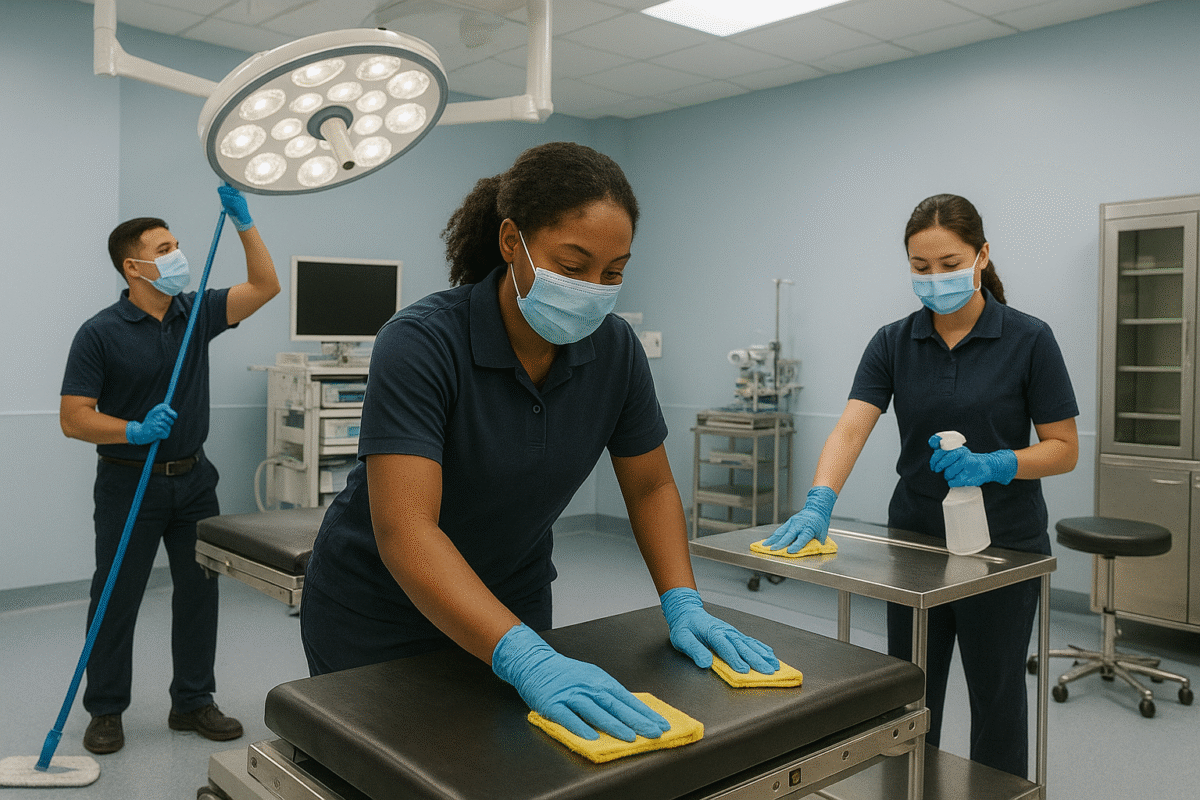
Technology can assist and guide, but hospital cleanliness ultimately depends on people. EVS professionals work between clinical care and patient experience—interacting with staff, patients, families, and leadership across all units. Their work is physically demanding, time-sensitive, and often emotionally taxing.
Yet, EVS teams frequently operate without the same real-time visibility, feedback mechanisms, and operational tools afforded to clinical departments. Empowering people begins with respecting their expertise and providing practical systems that:
- document work objectively
- guide cleaning priorities
- support training
- reduce ambiguity
- reinforce accountability
A person with the right tools performs better—every time.
When AI Supports Operations, Not Replaces Them
The promise of AI in EVS is not automation of labor; it is amplification of effectiveness. AI-powered inspections standardize evaluation. Analytics uncover patterns. Automated reporting saves administrative time. Instead of manually organizing checklists and compiling spreadsheets, leadership can focus on coaching staff and improving outcomes.
AI-assisted EVS enables:
- Consistency between staff and shifts
- Better prioritization during high-volume periods
- Documentation for compliance and accreditation
- Rapid response to recurring deficiencies
Technology simplifies decision-making, but never eliminates human judgment—especially in healthcare environments with real-world variables.
Cleanliness and Patient Trust
A spotless environment does more than present well—it signals safety. Patients form immediate emotional assessments of a facility based on visual and sensory hygiene. They may not understand clinical quality indicators, but they respond instinctively to:
- odors
- visible dust or stains
- clutter
- bathroom condition
- organization of equipment
If a patient feels a space is unclean, they may assume care is unclean—even when clinical procedures are excellent.
Clean spaces communicate care. They communicate diligence. They communicate respect.

A Future Built on Respect and Precision
The evolution of EVS from manual labor to data-supported hygiene management is not simply an operational shift—it is a cultural one. Healthcare organizations that invest in EVS, recognize its clinical relevance, and support teams with smart tools are building safer, more trusted environments.
Cleanliness is not cosmetic—it is clinical. And as healthcare advances, EVS must advance with it.
About the Author:
Gerard H.J. Eveillard is the founder and CEO of Hemes EVS. His career in environmental services within leading Florida hospital systems has shaped a practical understanding of EVS operations, inspiring the development of modern, AI-supported solutions that elevate hygiene quality and organizational confidence.
